The Rise of Affordable Luxury Fragrance: Lessons for Perfume Brands and Manufacturers
In recent years, affordable perfumes with premium scent profiles have attracted growing attention in the global fragrance market.
Consumers are increasingly willing to explore alternatives to expensive designer and niche fragrances. Many are looking for perfumes that offer an appealing scent, good longevity, attractive packaging, and a sense of luxury—without necessarily paying a luxury price.
The international visibility of Middle Eastern fragrance houses such as Lattafa illustrates this shift.
For perfume brands and OEM/ODM manufacturers, this trend raises an important question:
What can emerging perfume brands learn from the success of affordable luxury fragrance, and how can they apply these lessons to their own product development?
The opportunity is not simply to create a cheaper version of an existing perfume. It is to understand consumer preferences, identify attractive fragrance directions, and develop products that balance scent quality, performance, cost, and brand identity.
Why Are Affordable Luxury-Inspired Perfumes Becoming More Popular?
Price is an important factor, but it is not the only reason consumers are exploring affordable fragrances.
Today’s perfume buyers can discover and compare thousands of products through social media, online marketplaces, fragrance communities, and video reviews.
They are increasingly familiar with fragrance notes, scent families, longevity, projection, and the differences between designer, niche, and affordable perfumes.
As a result, a high retail price is no longer the only signal of an attractive fragrance.
According to Circana’s 2025 U.S. beauty market analysis, fragrance sales in mass retail grew by 17% during the first half of 2025. The research identified consumer interest in accessible alternatives to luxury fragrances as one factor supporting this growth.
This suggests an important change in purchasing behavior: consumers are willing to consider fragrances at different price levels if the overall experience meets their expectations.
For brands, this creates opportunities in the affordable premium and masstige perfume segments.
However, affordability alone is not enough. Consumers still expect the perfume to smell attractive, perform well, and feel worth purchasing again.
What Can Perfume Brands Learn from Lattafa?
Lattafa is an interesting case study in how a fragrance house can combine regional heritage with international market positioning.
The UAE-based company is not a newly established brand. It has a multi-generational history, and according to Lattafa’s official company profile, its products now reach consumers in more than 120 countries.
Its portfolio combines Arabian fragrance traditions with different modern scent directions and product concepts.
The brand’s international visibility also reflects wider interest in Middle Eastern perfumery. Euromonitor International reported that Arabian fragrances recorded approximately 50% global e-commerce sales growth in 2025, based on its tracked markets.
That figure describes the Arabian fragrance category, not Lattafa’s individual growth rate.
For emerging perfume brands, several lessons are particularly relevant.
1. A Recognizable Fragrance Identity Matters
A successful perfume needs more than a pleasant opening.
Consumers often remember a fragrance through its distinctive combination of notes, its overall character, and the impression it leaves after several hours.
For example, Lattafa’s Khamrah features an aromatic spicy and gourmand structure, with cinnamon, nutmeg, dates, praline, vanilla, tonka, and woody amber elements.
Its profile illustrates how warm spices, edible sweetness, and a rich base can create a recognizable fragrance character.
The lesson for new perfume brands is not to reproduce a specific product. It is to understand why certain combinations create a memorable scent experience.
2. Premium Perception Is Not Determined by Price Alone
Consumers evaluate perfume through several connected elements: fragrance quality, scent performance, bottle design, packaging, brand story, and retail price.
An affordable perfume can still communicate a premium identity when these elements work together.
For manufacturers, this means fragrance development should begin with the brand’s intended market position.
A perfume designed for an entry-level collection may require a different raw material cost structure from a premium niche fragrance.
However, both products need an attractive opening, a balanced heart, and a suitable dry down.
3. Social Media Can Accelerate Fragrance Discovery
TikTok, Instagram, YouTube, and fragrance review communities have changed how many consumers discover perfume.
A fragrance can attract attention through reviews, scent descriptions, performance comparisons, and recommendations from other users.
Middle Eastern brands have benefited from this wider digital discovery environment, particularly as consumers have become more interested in Arabian-inspired scent profiles.
For a new perfume brand, this creates an opportunity—but also a challenge.
Social media may generate initial interest, while product quality and customer experience determine whether consumers purchase again.
A recognizable fragrance can support marketing, but marketing cannot fully compensate for an unsatisfactory scent experience.
Which Fragrance Directions Offer Opportunities for New Perfume Brands?
There is no single fragrance family that guarantees commercial success.
However, several fragrance directions are worth evaluating when developing affordable premium perfume collections.
Gourmand and Vanilla Fragrances
Vanilla, caramel, praline, coffee, creamy notes, and warm spices can create comforting and memorable scent profiles. Depending on the structure, they can be playful, elegant, or rich and sophisticated.
Amber, Woody, and Musky Fragrances
Amberwood, sandalwood, cedarwood, patchouli, and modern musks can create a refined dry down with a strong signature.
These directions are suitable for men’s, women’s, and unisex fragrance concepts.
Modern Arabian-Inspired Fragrances
Oud, rose, saffron, incense, amber, and resinous notes remain important fragrance inspirations.
However, these materials can also be interpreted in fresher, softer, or more contemporary structures rather than only in traditional heavy compositions.
Fruity Floral and Soft Musk Fragrances
Fruity openings, modern floral accords, clean musk, and soft woods can create accessible scents for brands targeting consumers who prefer fresh, elegant, and easy-to-wear perfumes.
For manufacturers, the important step is to select fragrance directions based on the target customer—not simply because a particular note is currently popular.
Should a New Perfume Brand Develop Luxury-Inspired or Original Fragrances?
This is one of the most important decisions in perfume brand development.
Some brands begin by studying existing market fragrances to understand consumer preferences, popular scent structures, and the expected performance of products at different prices.
A reference fragrance can help communicate a preferred direction to a fragrance supplier.
However, market references and original fragrance development serve different purposes.
Reference-Based Fragrance Development
When a customer provides an authorized reference sample or an olfactive benchmark, the supplier can evaluate its scent profile, structure, diffusion, and dry down.
Professional Perfume Benchmark Matching can support reference-based development and further adjustments according to the customer’s target price, performance requirements, and intended perfume format.
Where appropriate, GC-MS analysis may help identify some components of the reference fragrance. However, instrumental analysis does not automatically reveal a complete original formula, and development still requires perfumer evaluation and formulation work.
Original Custom Perfume Development
For brands seeking a distinctive long-term identity, original fragrance development provides another path.
Instead of beginning with a finished market perfume, the project starts with the brand’s own concept, scent direction, target consumers, and price positioning.
Through Custom Perfume Fragrance Development, brands can explore floral, woody, gourmand, amber, musky, oud, or other directions and refine them through sample testing.
A brand may use market research to understand consumer preferences while developing its own independent fragrance identity.
The long-term goal should be to create a scent that consumers remember as part of your brand, rather than relying entirely on comparisons with another product.
How Can Perfume Brands Balance Fragrance Quality, Performance, and Cost?
Affordable luxury fragrance development requires careful cost planning.
A perfume brand may want a refined scent, noticeable projection, and long-lasting performance while maintaining a competitive retail price.
However, increasing fragrance concentration or using more expensive raw materials does not automatically produce a better perfume.
Different aroma chemicals and natural materials contribute to fragrance quality in different ways.
Some materials provide brightness and diffusion. Others add texture, floral richness, softness, depth, or a lasting musky and woody background.
A well-designed fragrance formula balances these effects according to the desired scent profile and final product format.
For example, a floral woody musk fragrance might be developed in several versions:
- A cost-conscious version for an entry-level perfume collection.
- A balanced commercial version with more refined floral and musky character.
- A premium version emphasizing greater complexity, smoothness, and dry-down quality.
These versions should be compared through actual testing rather than judged by fragrance concentrate price alone.
For a more detailed discussion of fragrance pricing, see our article How Much Should a New Perfume Brand Pay for Perfume Fragrance Concentrate?.
The objective is not always to select the most expensive formula. It is to choose the fragrance that best matches the brand’s quality expectations, product positioning, and commercial budget.
What Should Perfume Manufacturers Test Before Launching a New Fragrance?
A perfume that smells attractive on a blotter may behave differently in the final product.
Before confirming a fragrance for commercial production, manufacturers should evaluate its performance in the intended formulation.
Important considerations include the opening scent, heart notes, dry down, diffusion, longevity, color, clarity, and storage stability.
Alcohol-based perfumes and oil-based perfumes may require different formulation adjustments.
The intended fragrance concentration, carrier system, and product format can influence solubility, scent release, and overall performance.
For international projects, technical documentation may also be required, including SDS/MSDS, applicable IFRA documentation, COA, and allergen information.
Testing and documentation should be confirmed for the selected fragrance, its intended application, and the relevant destination market.
A successful perfume launch depends not only on an attractive scent concept but also on reliable formulation and manufacturing performance.
Five Practical Lessons for Emerging Perfume Brands
The rise of affordable luxury fragrance offers several useful lessons for brands planning new products.
First, understand your target consumer. Study which fragrance families, price levels, and product formats fit your intended market.
Second, build a distinctive scent portfolio. Instead of developing many similar fragrances, consider a smaller collection with recognizable differences in style and character.
Third, evaluate several quality and cost options. Comparing different fragrance versions can help determine which formula delivers the most suitable value.
Fourth, test the fragrance in the finished perfume system. Fragrance quality, solubility, diffusion, and stability should be evaluated before bulk production.
Finally, build your own brand identity. Market trends provide useful inspiration, but sustainable differentiation depends on product experience, quality consistency, and a recognizable fragrance character.
For perfume manufacturers and private label businesses, these principles can help guide both product selection and fragrance concentrate development.
How Gar Aromas® Supports Perfume Brands and Manufacturers
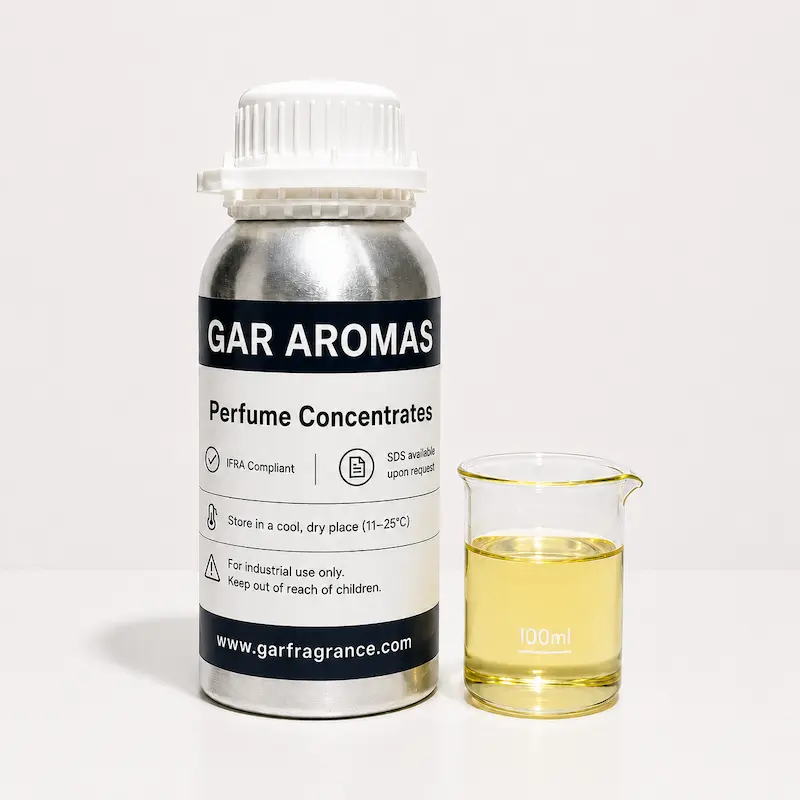
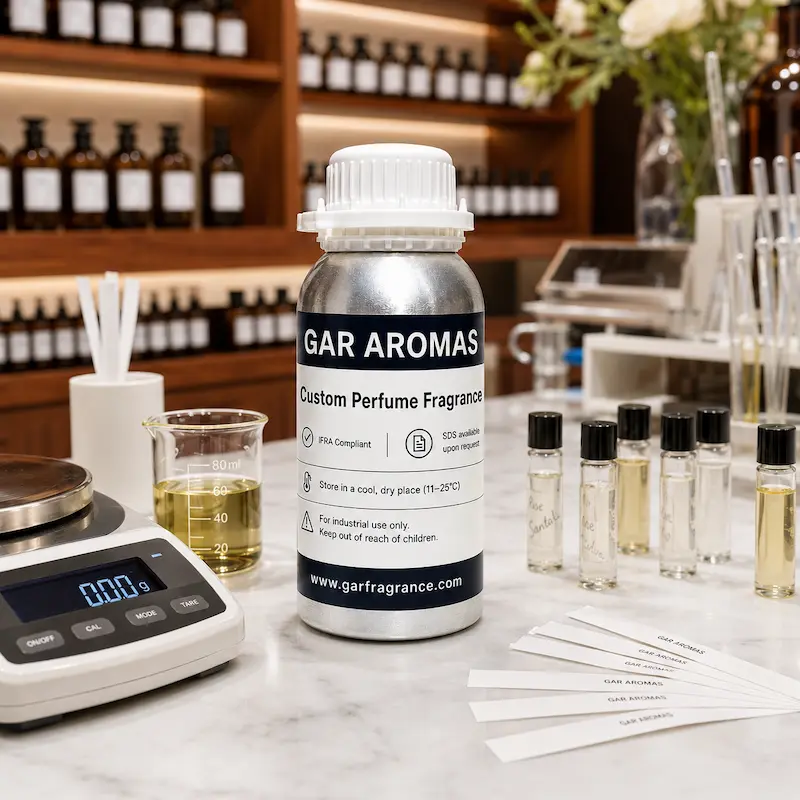
Gar Aromas® supports perfume brands, independent fragrance businesses, and OEM/ODM manufacturers with fragrance concentrate selection, custom development, and reference-based fragrance projects.
Our Perfume Concentrates can be evaluated for different fine fragrance applications, including EDP, EDT, body mist, and other suitable perfume formats.
For brands developing new collections, we can recommend existing fragrance directions or create customized fragrance samples according to the target market, scent brief, price range, and product format.
For reference-based projects, we can support olfactive evaluation, GC-MS analysis where appropriate, and fragrance adjustments based on performance and cost requirements.
We can also explore different quality and cost versions of a fragrance direction, helping customers compare scent character, diffusion, dry down, and formulation performance.
Depending on the selected fragrance and project requirements, technical documentation such as SDS/MSDS, applicable IFRA documentation, COA, and allergen information can be provided.
The growth of affordable luxury perfume shows that consumers are open to discovering fragrance brands beyond traditional luxury houses.
For new perfume brands, the opportunity is not simply to offer a lower-priced alternative. It is to develop distinctive fragrances that combine appealing scent quality, suitable performance, attractive positioning, and commercial value.
If you are planning a new perfume collection or looking for fragrance concentrates for your brand, contact Gar Aromas® to discuss your scent direction, target market, product format, and development requirements.
Disclaimer
This article is provided for independent industry analysis and educational purposes only. All brand names and trademarks mentioned belong to their respective owners.
GAR Aromas® is not affiliated with, sponsored by, endorsed by, or officially associated with Lattafa or any other brands referenced in this article.
Brand references are used solely to discuss publicly available market trends and fragrance industry developments. They do not imply any commercial partnership, manufacturing relationship, or authorization.