For many new perfume brands, one of the first questions is very practical: how much should we pay for perfume fragrance concentrate?
Some suppliers may offer perfume fragrance concentrates at around USD 50/kg, while others may offer USD 100/kg or even higher. For a new perfume brand, this can be confusing. Does a higher price always mean better quality? Can a lower-cost fragrance concentrate still be used for a perfume brand? What is the real difference between different price levels?
These price levels are only examples. Actual perfume fragrance concentrate prices depend on formula complexity, raw materials, order quantity, application, technical requirements, and target market.
A perfume fragrance concentrate is not just a pleasant smell. It is the core of the final perfume product, affecting the opening, heart, dry down, diffusion, longevity, stability, and overall brand impression.
Why Perfume Fragrance Concentrates Have Different Price Levels
Perfume fragrance concentrates have different price levels because they are designed with different raw materials, fragrance structures, and performance targets.
A fragrance for an entry-level body mist does not need the same structure as a premium perfume oil or a niche-style Eau de Parfum. A fresh commercial fragrance for a price-sensitive market may require a clear, pleasant, and cost-effective scent profile. A premium perfume line may require better dry down quality, more refined materials, smoother transitions, and stronger brand identity.
From a perfumer’s point of view, price is not only about whether the fragrance smells good in the first few seconds. It is also about how the fragrance develops after 10 minutes, 30 minutes, 2 hours, or longer. The real difference often appears in the heart and base notes.
Is a USD 50/kg Fragrance Concentrate Different from a USD 100/kg One?
A USD 50/kg perfume fragrance concentrate and a USD 100/kg fragrance concentrate may both smell pleasant at first. The difference is usually not as simple as “one is good and one is bad.” They may be designed for different product positions.
A lower-cost fragrance concentrate may be suitable for entry-level perfume lines, body mists, promotional products, or markets where cost control is very important. It can still provide a clear fragrance direction and acceptable performance, but there may be limitations in naturalness, complexity, dry down quality, diffusion, or refinement.
A higher-cost fragrance concentrate usually gives the perfumer more space to use better-quality materials and build a more complete fragrance structure. It may have a smoother heart, cleaner dry down, better longevity, more natural floral effects, softer musks, or more elegant woody and amber notes.
However, this does not mean every new perfume brand must choose the highest price level. If the product is a light body mist for daily use, a very rich and expensive fragrance structure may not be necessary. If the product is a premium perfume oil, Middle East style EDP, or niche-style private label perfume, a very simple low-cost fragrance may not support the desired brand positioning.
The right price level should match the final product, not just the supplier’s quotation.
Raw Materials Affect Fragrance Cost
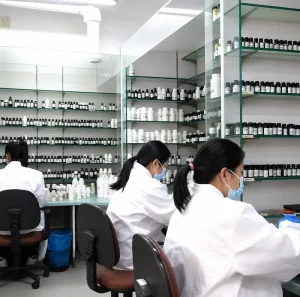
One of the most important reasons for different fragrance price levels is raw material selection. Even for the same olfactive direction, a perfumer can use different raw material combinations to create the final scent.
Take jasmine as an example. Natural jasmine absolute is usually expensive and complex. It can bring floral, fruity, green, warm, and slightly animalic facets, adding depth and naturalness to a perfume composition. However, in commercial perfume fragrance development, perfumers do not simply use a large amount of natural jasmine absolute. Cost, intensity, regulatory limits, and batch consistency all need to be considered.
In modern fine fragrance creation, perfumers often use materials such as Methyl Dihydrojasmonate to create a transparent, soft, diffusive jasmine-like floral effect. Standard Methyl Dihydrojasmonate and high-cis Methyl Dihydrojasmonate can also have different olfactive qualities and cost levels. High-cis types are often brighter, cleaner, more diffusive, and more elegant, helping create an airy and premium floral effect, but they are also more costly.
This means a high-quality floral perfume fragrance is not simply about using only natural raw materials. It is also not about replacing natural notes with the cheapest synthetic materials. Professional fragrance design is about finding the right balance between natural materials, modern aroma molecules, musks, woods, amber materials, and other supporting notes according to the customer’s budget, target market, application, and fragrance style.
This is why different price levels are not only about whether a fragrance smells “good.” The real question is whether the scent remains clean, smooth, layered, and comfortable after several hours on skin or in the final product base.

Why the Dry Down Matters More Than the First Smell
When evaluating fragrance samples, many new perfume brands focus on the opening. This is understandable because the opening creates the first impression. But for perfume products, the dry down is often more important for long-term consumer experience.
The top notes attract attention. The heart notes define the main character of the perfume. The base notes decide the lasting impression.
A fragrance may smell strong and impressive in the first few seconds, but if the middle and base notes are weak, the perfume may quickly become flat, rough, or unbalanced. Another fragrance may be less aggressive at the opening, but after one or two hours, it may show a smoother, more elegant, and more premium dry down.
For EDP, perfume oil, roll-on perfume, and private label perfume projects, dry down quality is especially important. Consumers may buy a perfume because of the opening, but they often remember it because of the dry down.
Different Perfume Products Need Different Cost Structures
A new perfume brand should not choose fragrance concentrate price only by comparing numbers per kilogram. The final product format matters.
For EDP or EDT, the fragrance concentrate needs to perform well in an alcohol-based system. Clarity, solubility, diffusion, and stability are important. The opening should be attractive, and the dry down should remain pleasant and long-lasting.
For perfume oil or roll-on perfume, the fragrance concentrate needs to work well in an oil carrier. Oil-based systems usually release fragrance more slowly than alcohol-based perfumes. The scent may stay closer to the skin, so softness, comfort, and dry down quality become very important.
For body mist, the fragrance usually needs to be lighter, fresher, and easier to diffuse. It may not need a heavy base, but it should still smell clean, pleasant, and stable in the final formula.
For alcohol-free perfume fragrance systems, the concentrate may need additional testing for solubility, clarity, stability, and fragrance release.
This means the same fragrance direction may require different cost structures depending on whether it is used in EDP, perfume oil, body mist, roll-on perfume, or alcohol-free perfume.
Do New Perfume Brands Always Need Expensive Fragrance Concentrates?
Not always.
A more expensive perfume fragrance concentrate may offer more possibilities in raw material quality, structure, dry down, diffusion, and refinement. But it is not always the best choice for every brand.
For a new perfume brand, the most important question is not “What is the most expensive fragrance?” The better question is: “What fragrance level matches our product positioning and target market?”
If the brand is developing a mass-market body mist, a cost-effective fragrance with a clear, fresh, and pleasant scent may be more suitable. If the brand is developing a premium perfume oil collection for the Middle East market, stronger diffusion, richer base notes, and a more refined dry down may be worth a higher fragrance cost.
Good fragrance selection is not about choosing the highest price. It is about choosing the most suitable price level for the product.
How We Compare Different Price Versions in Real Development
In real fragrance development work, we often create 3–5 versions based on the same fragrance brief or olfactive direction, each with a different cost structure.
This allows the customer to compare the difference in opening impact, dry down quality, diffusion, longevity, naturalness, and overall refinement before choosing the version that best matches their brand positioning and budget.
For example, if a customer wants a floral woody musk fragrance for a private label perfume project, we may prepare a cost-effective version, a balanced commercial version, and a more premium version with better dry down quality and material refinement. These versions may follow the same fragrance direction, but the raw material choices, structure, depth, and skin performance can be different.
This approach helps customers make a practical decision. Instead of judging only by price per kilogram, they can smell and compare how each version performs in the final application.
Regulatory and Document Requirements Can Also Affect Development
Regulatory requirements can also affect fragrance development. If a brand needs IFRA certificates, SDS/MSDS, COA, allergen declarations, phthalate-free options, Lilial-free or Lyral-free requirements, or specific market restrictions, the perfumer must consider these requirements when selecting raw materials.
These requirements are not only about documents. They may influence formula flexibility, material choices, dosage limits, and the final cost structure. A professional perfume fragrance supplier should help customers evaluate the fragrance according to the final product type, usage level, and target market.
How Can a New Perfume Brand Choose the Right Price Level?
Before choosing a perfume fragrance concentrate, a new perfume brand should first clarify the product concept.
Is the final product EDP, EDT, perfume oil, body mist, roll-on perfume, or alcohol-free perfume? Is the target market the Middle East, Europe, Southeast Asia, the United States, or another region? Is the brand positioned as entry-level, commercial, mid-range, premium, or niche? Does the product need strong opening impact, long-lasting dry down, good diffusion, soft skin feel, or overall balance? Are IFRA, SDS, COA, and allergen declarations required?
The clearer these points are, the easier it is for the fragrance supplier to recommend a suitable price level.
Choosing only the lowest price may reduce fragrance depth, stability, and brand quality. Choosing a high-cost fragrance without a clear product strategy may also create unnecessary cost pressure. The best approach is to match the fragrance price level with the final product positioning.
How Gar Aromas® Supports Cost-Controlled Perfume Fragrance Development
Gar Aromas® supports perfume brands, private label perfume projects, and perfume OEM/ODM manufacturers with perfume fragrance concentrate development. We can recommend existing fragrance directions or develop custom perfume fragrances according to the customer’s target market, product format, olfactive direction, and budget range.
During development, we help customers balance fragrance quality, diffusion, longevity, solvent compatibility, regulatory document needs, and cost control. For mid-to-premium projects, we can improve dry down quality, naturalness, and fragrance structure. For cost-sensitive projects, we can also optimize fragrance performance within a suitable budget range.
If you are comparing different price levels of perfume fragrance concentrate, or looking for a custom perfume fragrance that better fits your brand positioning, contact Gar Aromas® to request sample suggestions or discuss a fragrance development project.
For more details about how we develop fragrance directions from a customer brief, read our article: Custom Perfume Fragrance Development: A Perfumer’s Guide for Premium Perfume Oil Brands.