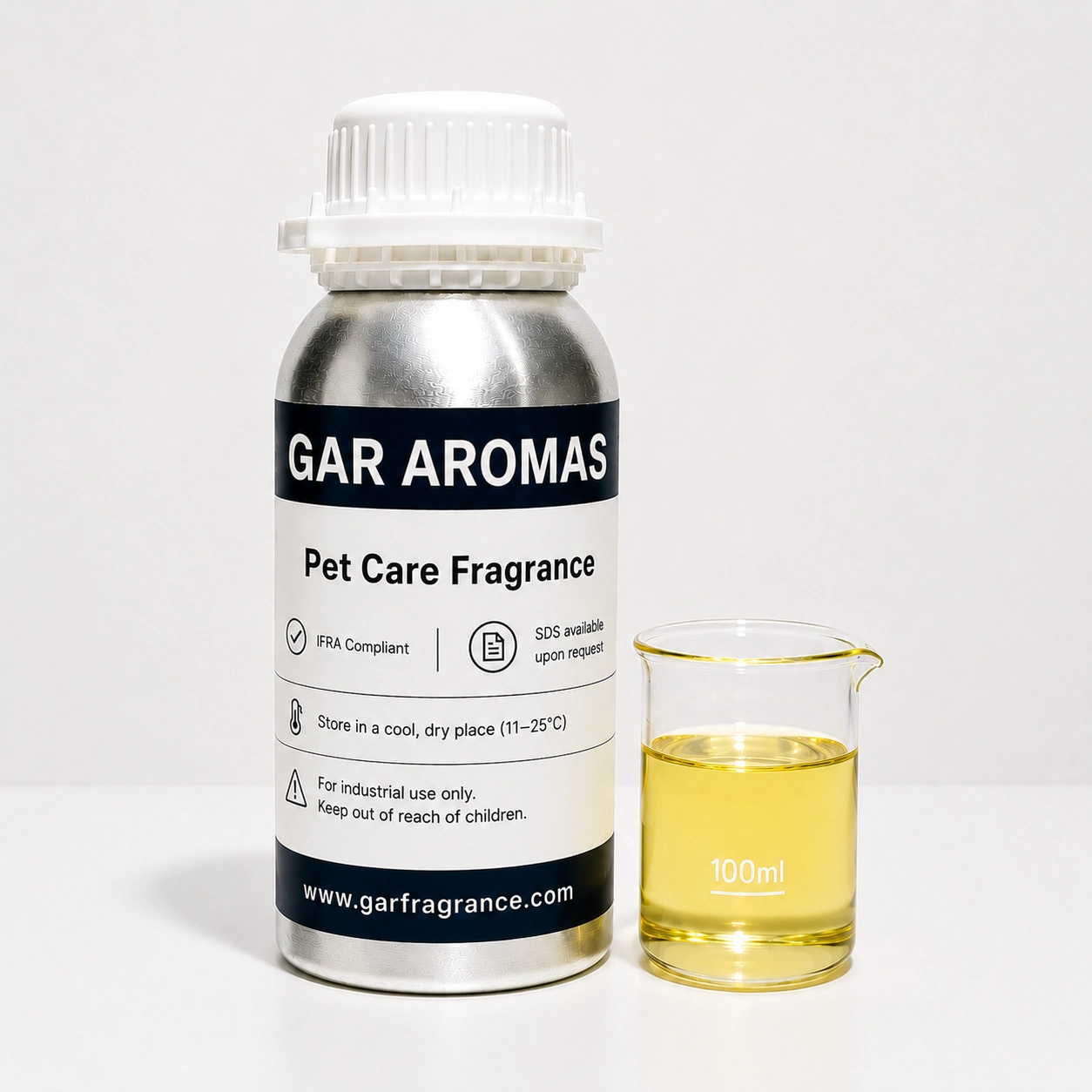
Custom Pet Care Fragrance for Product Manufacturers
Gar Aromas® develops custom pet care fragrance for grooming and litter product projects, with samples and bulk supply for manufacturers.
- Custom fragrance development for pet grooming products, including pet shampoo and conditioner projects.
- Application-specific selection based on target species, use method, formula base and desired scent intensity.
- Separate development briefs for grooming, litter and pet-area cleaning products.
- Clean fresh, cotton, green and soft floral scent profiles, with benchmark matching for brand and OEM/ODM projects.
- Standard MOQ of 50 kg per fragrance, with samples and supporting documents available on request.
Pet Care Fragrance Description
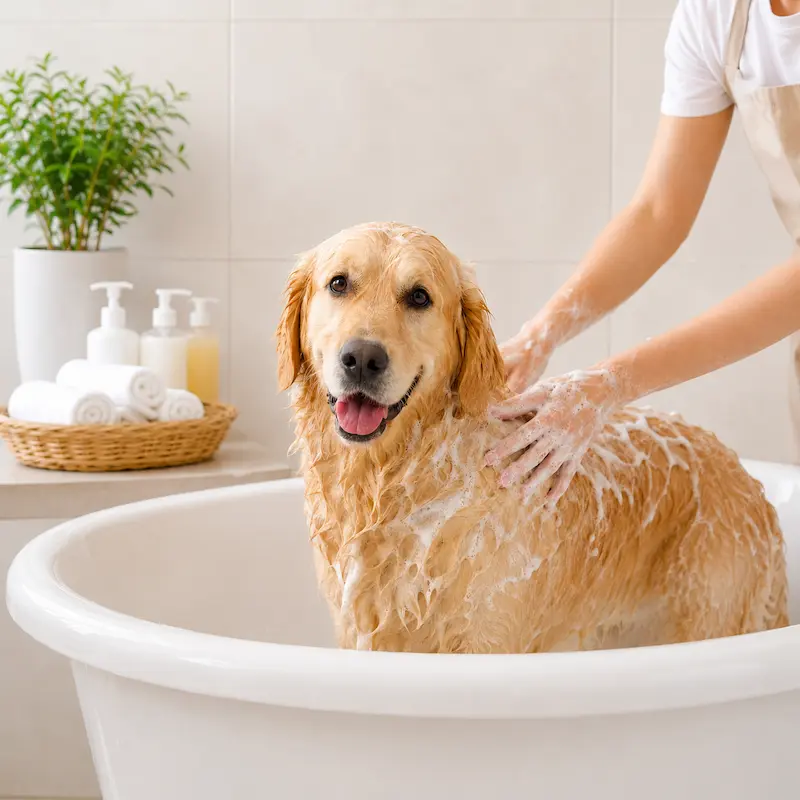
Custom Fragrance for Pet Grooming Products
Gar Aromas® develops custom fragrance for pet grooming products and supplies fragrance concentrates to brands, private label businesses and OEM/ODM manufacturers.
Pet shampoo, rinse-off conditioner, grooming wipes and leave-on products each require a clearly defined application brief. Fragrance selection starts with the target animal species, formula base, use method, contact conditions and intended scent profile.
Pet Shampoo and Litter Fragrance Projects
Pet shampoo and litter fragrances should be developed against separate briefs. A shampoo project involves the cleansing base, rinsing conditions and scent after use. A litter project involves the carrier material, fragrance incorporation, release during storage and use, and appropriate assessment of animal acceptance.
Pet-area cleaning products also require a separate review of their formula, surface application and potential animal exposure. Suitability should be established for the declared finished product.
Custom Scent Development and Bulk Supply
Clean fresh, cotton, green and soft floral profiles can be explored according to your brand brief. The requested scent intensity should be evaluated alongside the intended application and finished-product assessment.
Gar Aromas® supports new scent development and benchmark matching. Share your reference sample, target market, cost requirements and expected order quantity to begin the project. Standard MOQ is 50 kg per fragrance, with custom requirements reviewed individually.
For an overview of cooperation options, see our guide to Custom Fragrance Development and Benchmark Matching.
Pet Care Fragrance Product Information
| Item | Information |
|---|---|
| Product Name | Pet Care Fragrance |
| Product Type | Fragrance concentrate for professional formulation |
| Development Projects | Pet shampoo, conditioner, grooming products, wipes, litter and pet-area cleaning products, subject to application review |
| Target Species | Defined in the project brief; suitability reviewed for the intended species and use |
| Appearance | Liquid; color and clarity depend on the selected fragrance composition |
| Scent Options | Clean fresh, cotton, green, soft floral and custom scent profiles |
| Recommended Dosage | Determined for the specific formulation, target species, exposure and finished-product safety review |
| Compatibility Evaluation | Formula or carrier compatibility, appearance, viscosity where relevant, storage stability and packaging interaction |
| Scent Evaluation | Scent character, intensity and performance in the declared finished-product application |
| Safety Review | Product-specific assessment of the intended species, exposure and complete formulation by appropriately qualified professionals |
| Sample Packaging | 30 mL glass sample bottles |
| Bulk Packaging | 25 kg drums; other packing options subject to confirmation |
| Standard MOQ | 50 kg per fragrance; custom project requirements reviewed individually |
| Customization | New scent development, benchmark matching and application-specific scent adjustments |
| Documentation | SDS, COA, allergen information and applicable IFRA documentation for the selected fragrance and declared use, available on request |
Request Custom Pet Care Fragrance Samples
Developing pet shampoo, grooming products, litter or a pet-area cleaner?
Tell us the target animal species, product type, formula base or carrier, use method and preferred scent. Include your target market, cost requirements and any benchmark sample.
Gar Aromas® can discuss fragrance development options, prepare samples for formulation trials and provide a bulk supply quotation. Standard MOQ is 50 kg per fragrance.
Pet Care Fragrance Applications
Pet care fragrance development should reflect how the finished product is used and how animals may be exposed to it.
| Application | Development and Evaluation Focus |
|---|---|
| Pet Shampoo and Rinse-Off Conditioner | Define the target species and rinsing conditions. Evaluate fragrance incorporation, formula appearance, viscosity where relevant, storage stability and scent after use. |
| Grooming Wipes and Leave-On Products | Review retained residues and intended contact conditions. Assess formula, wipe material and packaging compatibility alongside product-specific safety requirements. |
| Litter Products and Litter Additives | Specify the litter substrate and use method. Evaluate fragrance incorporation, storage, scent release, relevant absorption or clumping performance and appropriate animal acceptance assessment. |
| Pet-Area Cleaning Products | Define the surfaces, use instructions and animal exposure conditions. Evaluate formula stability, surface compatibility and scent performance in the finished cleaning product. |
Each application requires its own development brief. A fragrance approved for one formulation or use pattern should be reviewed again before introduction into another product.
Pet Care Fragrance FAQ
Pet Care Fragrance Development and Sample Evaluation
A clear application brief helps guide fragrance selection and sampling.
- Define the intended use. Identify the target species, product format, application method and relevant contact conditions.
- Evaluate the formula or carrier. Assess samples in the intended base for appearance, dispersion, viscosity where relevant, storage stability and packaging compatibility.
- Assess scent and malodor separately. Compare fragrance character and intensity under consistent conditions. Where odor control is required, use an appropriate evaluation method to assess the remaining malodor.
- Complete the relevant professional review. Arrange product-specific safety assessment before animal-use evaluation or launch. Include potential exposure through skin contact, grooming-related ingestion and inhalation where relevant.
Record the approved fragrance code, composition reference, dosage, formulation and documentation before placing the bulk order.
Related News
Custom Fragrance Development, Benchmark Matching or Customer-Owned Formula Manufacturing: Which Model Fits Your Project? Not every fragrance project starts from […]