Soap Fragrance
Technical Reference
| Item | Reference Information |
| Product Name | Soap Fragrance |
| Application | Soap, handmade soap, cleansing bars, transparent soap, syndet bars, hotel amenity soap |
| Appearance | Usually clear to pale yellow liquid, depending on fragrance composition |
| Recommended Dosage | Common reference range: 0.5%–2.0% |
| Suitable System | Solid soap bases, soap-based cleansing systems, synthetic cleansing bar systems |
| Typical pH Range | Traditional soap is usually alkaline; the final pH depends on the soap base type |
| Testing Recommended | Soap base stability, color observation, scent retention, heat resistance, storage stability |
| Documents Available | SDS, IFRA statement, allergen information, technical support documents upon request |
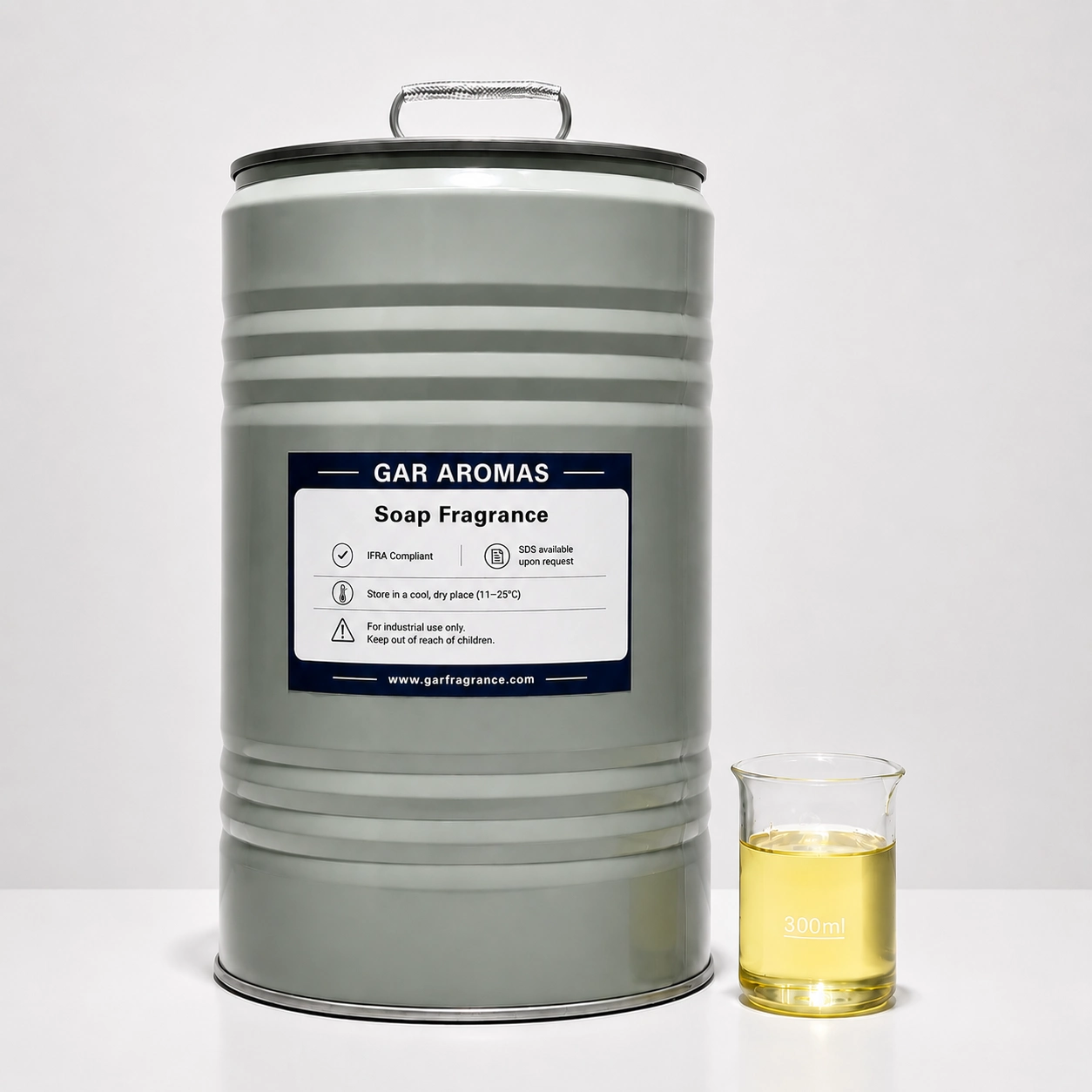
| Packaging | 30 ml glass sample bottles, 25 kg drums, or customized packing options |
Note:
The final dosage depends on the soap base type, fragrance strength, production process, target market, regulatory requirements, and expected scent intensity. We recommend testing the fragrance in the actual soap base before commercial production.
Fragrance Solutions for Soap, Handmade Soap, and Cleansing Bars
Soap fragrance needs to do more than smell pleasant. It must perform well in soap bases and remain stable during production, shaping, storage, and use.
Unlike body wash and hand wash, soap is usually a solid cleansing product. The fragrance may need to withstand higher pH conditions, soap base materials, heating processes, cold-process soap curing, color changes, and long-term storage. For this reason, soap fragrance development focuses strongly on soap base compatibility, scent stability, and color stability.
Gar Aromas® provides soap fragrance solutions for soap manufacturers, handmade soap brands, personal care factories, private label projects, and OEM/ODM customers.
What Makes a Good Soap Fragrance?
A suitable soap fragrance should remain clear, stable, and well-balanced in the soap base. It should not only smell good in the finished product, but also release a clean and pleasant scent when consumers use the soap with water and foam.
In soap products, fragrance may be affected by the soap base, fatty acid salts, alkaline conditions, plant oils, pigments, functional additives, and production temperature. Some fragrances may smell good on a blotter, but become weaker, distorted, discolored, accelerate trace, or lose scent performance after being added to the soap base.
For this reason, soap fragrance should be tested in the actual soap base, not only evaluated by smelling the fragrance oil alone.
Key Performance Requirements
| Requirement | Why It Matters in Soap |
| Soap Base Stability | Helps the fragrance remain stable in solid soap bases. |
| Alkaline Resistance | Supports performance in soap systems with higher pH conditions. |
| Color Stability | Reduces the risk of yellowing, darkening, or unwanted color change. |
| Scent Retention | Helps maintain fragrance during shaping, storage, and use. |
| In-Use Release | Allows the scent to release cleanly when the soap contacts water and foam. |
| Process Compatibility | Supports different soap types, including industrial soap, handmade soap, and cleansing bars. |
Popular Fragrance Directions for Soap
| Fragrance Direction | Typical Impression | Suitable Product Type |
| Lavender | Relaxing, clean, classic | Handmade soap, cleansing bars, natural concept soap |
| Rose Floral | Soft, elegant, traditional | Women’s soap, gift soap, daily soap |
| Milky Creamy | Gentle, smooth, moisturizing impression | Milk soap, moisturizing soap, family soap |
| Citrus Fresh | Bright, clean, energetic | Daily cleansing soap, summer soap |
| Herbal Green | Natural, botanical, refreshing | Herbal soap, natural care concepts |
| Sandalwood Woody | Warm, mature, refined | Men’s soap, premium cleansing bars |
| Musky Powdery | Clean, soft, long-lasting impression | Premium soap, hotel amenity soap |
Common Issues in Soap Fragrance Development
Fragrance becomes weak or distorted in the soap base
Some fragrances smell good alone, but become weaker, duller, or lose their fresh character after being added to the soap base. Soap fragrance should be evaluated based on its real performance in the soap base, not only by the fragrance oil itself.
Soap color becomes yellow or darker
Certain fragrance materials may affect the color of soap, especially white soap, light-colored soap, transparent soap, and gift soap products. Color stability testing is very important for soap applications.
Process compatibility issues in handmade soap
In cold-process or handmade soap production, some fragrances may affect fluidity, trace speed, or final appearance. For these products, actual process testing is recommended before small-batch or commercial production.
Soap Fragrance Development Support
Gar Aromas® helps customers select or develop suitable soap fragrances based on soap base type, production process, target market, and fragrance direction.
We support soap fragrance sample recommendation, custom fragrance development, classic scent creation, market-inspired scent matching, IFRA-guided fragrance selection, and basic stability evaluation in customer-provided soap bases.
Whether you are developing daily soap, handmade soap, hotel amenity soap, natural concept cleansing bars, or private label soap collections, we can help recommend suitable fragrance directions for testing.
Request Soap Fragrance Samples
A successful soap fragrance should remain stable in the soap base, resist obvious scent distortion or color change during storage, and release a clean, pleasant scent when used with water and foam.
Gar Aromas® supplies soap fragrance solutions for global soap manufacturers, personal care brands, handmade soap brands, and OEM/ODM factories.