Understand perfume notes structure with a professional perfumer’s perspective. Learn how top, middle, and base notes work together to create long-lasting fragrances.
Perfume Notes Explained: Top, Middle and Base Notes in Fragrance Design
When clients ask me to develop a new fragrance, one of the most common questions is:
“Why does a perfume smell different after a few minutes?”
At first, the scent feels bright and fresh.
Then it becomes softer, sometimes more floral or warm.
Hours later, what remains can be deep, woody, or musky.
This transformation is not accidental.
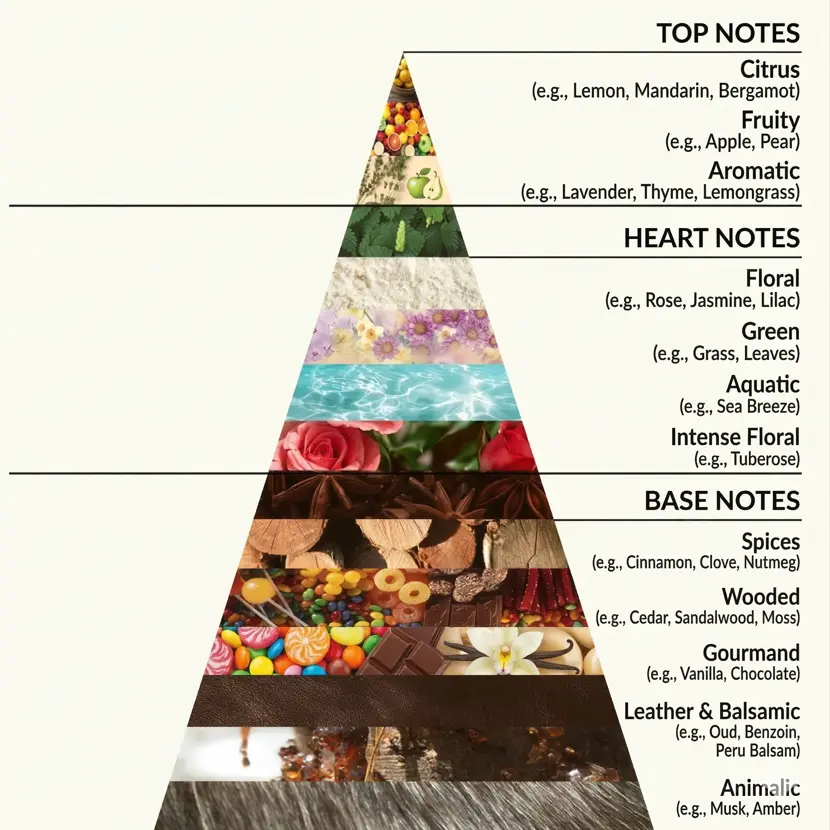
It comes from the way a fragrance is structured — using what we call
top notes, middle notes, and base notes.
Understanding this structure is essential not only for perfumers, but also for brands developing fine fragrance, home fragrance, or even detergent products.
Why Perfumes Are Built in Layers
Fragrance Is Designed as a Time-Based Experience
In professional perfumery, a fragrance is never designed as a “static smell.”
Instead, it is built as a time-based composition, where different ingredients evaporate at different speeds.
This is why we refer to perfume structure as:
-
Top notes (opening)
-
Middle notes (heart)
-
Base notes (foundation)
Each layer plays a specific role in how the fragrance is perceived.
If you are familiar with the concept of fragrance families, this layered structure also connects closely to tools like the
👉 Fragrance Wheel (you can link to your existing article here)
What Are Top Notes in Perfume
The First Impression of a Fragrance
Top notes are the first scents you smell immediately after applying a perfume.
They are typically:
-
Light
-
Fresh
-
Highly volatile
Common top note ingredients include:
-
Bergamot
-
Lemon
-
Orange
-
Pink pepper
-
Green notes
These ingredients evaporate quickly, usually within 5–15 minutes.
👉 To create an attractive first impression
However, many people misunderstand top notes.
They are not meant to last — they are designed to invite you into the fragrance.
What Are Middle Notes (Heart Notes)
The Core Identity of the Fragrance
As the top notes fade, the middle notes begin to appear.
These are often called the heart of the fragrance.
Typical middle note ingredients include:
-
Rose
-
Jasmine
-
Lavender
-
Geranium
-
Light spices (such as cinnamon or nutmeg)
Middle notes usually last between 30 minutes to several hours.
From a perfumer’s perspective:
👉 This is where the true character of the fragrance is defined
If you are developing a perfume line, this is often where brand identity is expressed — whether it is floral, woody, or oriental.
What Are Base Notes
The Foundation and Longevity of the Fragrance
Base notes appear after the fragrance has settled on the skin.
They are:
-
Rich
-
Deep
-
Long-lasting
Common base note ingredients include:
-
Oud
-
Amber
-
Patchouli
-
Sandalwood
-
Musk
-
Vanilla
These ingredients can last several hours or even longer.
Their role is critical:
👉 They provide depth, stability, and fragrance longevity
In fact, when clients ask for a long-lasting fragrance, we usually adjust the base note structure.
This is also closely related to fragrance performance in applications such as
👉 laundry products or candles
How Top, Middle and Base Notes Work Together
Balancing Volatility and Perception
A well-designed fragrance is not about strong ingredients — it is about balance.
Perfumers carefully adjust:
-
Evaporation rate
-
Ingredient compatibility
-
Olfactive harmony
For example:
-
Too many top notes → fragrance feels sharp and disappears quickly
-
Too heavy base notes → fragrance feels flat and lacks freshness
The goal is to create a smooth transition:
Fresh → Character → Depth
This transition is what makes a fragrance feel alive and evolving.
Common Mistakes When Evaluating Perfume Notes
Why First Impressions Can Be Misleading
One of the most common mistakes I see from clients is:
Judging a fragrance only based on the first few minutes.
In reality:
-
The top note is only a small part of the full composition
-
The true performance appears over time
For product development, especially in:
-
Fine fragrance
-
Home fragrance (candles, diffusers)
-
Fabric care
It is important to evaluate fragrance over its full lifecycle.
Understanding top, middle, and base notes is the foundation of professional fragrance development.
It allows you to:
-
Design more balanced fragrances
-
Improve fragrance longevity
-
Align scent with brand identity
If you are working on a new fragrance project — whether for perfume, candles, or detergent applications — this structure is where everything begins.
👉 If you need support in developing custom fragrance compositions, feel free to explore our fragrance development solutions or contact our perfumer team.