Michael Edwards Fragrance Wheel Explained: A Perfumer’s Guide to Modern Fine Fragrance
Introduction: Why the Fragrance Wheel Still Matters
In the world of fine fragrance, trends come and go, raw materials evolve, and consumer preferences continuously shift. Yet one framework has remained remarkably resilient for decades: the Michael Edwards Fragrance Wheel.
For perfumers, fragrance houses, and brand owners alike, the Fragrance Wheel is far more than a marketing diagram. It is a shared professional language—a system that helps us understand scent structure, classify olfactive families, and translate emotion into formula logic.
As a fragrance manufacturer working closely with international brands and independent perfumers, we see the Fragrance Wheel not as a rigid rulebook, but as a living reference—one that continues to evolve alongside modern perfumery.
What Is the Michael Edwards Fragrance Wheel?
Created by fragrance expert Michael Edwards, the Fragrance Wheel organizes perfumes into olfactive families based on their dominant character and aromatic relationships. Unlike linear classifications, the circular structure reflects how fragrance styles naturally transition from one family to another.
At its core, the wheel is divided into four major families:
- Floral
- Oriental (Amber)
- Woody
- Fresh
Each family is further subdivided into more specific olfactive groups, forming a nuanced map that mirrors how perfumers actually think when building compositions.
The Four Core Fragrance Families Explained
1. Floral: The Emotional Heart of Fine Fragrance
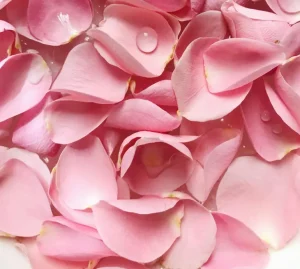
Floral fragrances remain the foundation of modern perfumery. From classic soliflores to complex bouquets, florals express softness, intimacy, and emotional resonance.
Common sub-groups include:
- Soft Floral
- Floral Aldehyde
- Floral Oriental
From a perfumer’s perspective, floral structures often serve as the emotional center of a fragrance—where character and identity are most clearly expressed.
2. Oriental (Amber): Warmth, Depth, and Sensuality
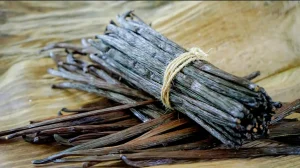
Often referred to as Amber, Oriental fragrances are defined by warmth, richness, and diffusion. Notes such as vanilla, resins, spices, and balsams dominate this family.
Sub-groups typically include:
- Soft Oriental
- Oriental
- Woody Oriental
These structures are essential when creating fragrances with lasting power, intimacy, and a strong signature, especially in fine fragrance and premium home scent applications.
3. Woody: Structure, Elegance, and Modern Sophistication
Woody fragrances form the architectural backbone of many modern perfumes. Cedarwood, sandalwood, vetiver, and patchouli provide depth, stability, and longevity.
Sub-groups include:
- Woods
- Mossy Woods
- Dry Woods
From an OEM and formulation standpoint, woody bases are crucial for performance consistency, especially in fine fragrance designed for global markets.

4. Fresh: Energy, Clarity, and Contemporary Appeal
Fresh fragrances represent brightness and immediacy. Citrus, green notes, aromatic herbs, and aquatic accords dominate this family.
Sub-groups include:
- Citrus
- Green
- Aquatic
- Aromatic
In recent years, fresh profiles have evolved far beyond simple citrus—often layered with woods or ambers to create modern, gender-neutral fine fragrances.
For perfume brands developing new olfactive directions, Gar Aromas® supplies perfume concentrates for EDP, EDT, body mist, and private label perfume products.
How Perfumers Use the Fragrance Wheel in Creation
For professional perfumers, the Fragrance Wheel is not a formula generator—it is a decision-making framework.
It helps answer key creative questions:
- Where does this fragrance sit emotionally?
- Which neighboring families can we borrow from to add complexity?
- How can we modernize a classic structure without losing clarity?
For example, many contemporary fine fragrances intentionally blur boundaries—such as floral-woody or fresh-amber profiles—reflecting changing consumer preferences for versatility and individuality.
Why the Fragrance Wheel Still Matters for Brands and OEM Projects
In OEM and ODM fine fragrance development, the Fragrance Wheel plays a critical role beyond creativity:
- Clear communication between brand, perfumer, and manufacturer
- Faster alignment on fragrance direction
- Reduced development cycles
- Better consistency across markets
By anchoring creative discussions in a shared olfactive language, brands can move from abstract emotion to executable fragrance briefs more efficiently.
The Evolution of the Fragrance Wheel in Modern Perfumery
While the core structure of the Michael Edwards Fragrance Wheel remains stable, modern perfumery continues to push its boundaries:
- Increased use of molecular ingredients
- Growing preference for gender-neutral fragrances
- Hybrid scent profiles combining multiple families
- Greater emphasis on texture, transparency, and contrast
Rather than replacing the wheel, these trends expand its relevance, proving that classic frameworks can coexist with innovation.
Our Perspective as a Fine Fragrance Manufacturer
As a fragrance manufacturer serving fine fragrance, personal care, and home care brands, we view the Fragrance Wheel as a strategic bridge between creativity and execution.
It allows us to:
- Translate perfumer intent into scalable formulations
- Maintain olfactive consistency across batches
- Adapt fragrance profiles for different markets while preserving identity
Understanding the Fragrance Wheel is not about categorization—it is about respecting the craft of perfumery and supporting it with technical precision.
If you need a fragrance direction created for your own brand, our custom perfume fragrance development service can support scent creation based on your target market, price level, and olfactive style.
Conclusion: A Timeless Framework for a Changing Industry
The Michael Edwards Fragrance Wheel remains one of the most influential tools in fine fragrance—not because it dictates creativity, but because it provides clarity.
For perfumers, it offers structure. For brands, it offers communication. For manufacturers, it offers alignment.
In an industry driven by emotion, artistry, and innovation, the Fragrance Wheel continues to serve as a quiet constant—guiding fragrance creation from inspiration to finished scent.
For customers comparing an existing market fragrance direction, our perfume benchmark matching service can support scent comparison, formula adjustment, and sample evaluation